Many
people own cameras nowadays, but how many people actually delve deeper into
their camera settings. How many have ever tried using custom settings? Many
people seem to be afraid of doing away with the automatic settings and that’s generally
because they think that the manual mode is too difficult to grasp.
Automatic
mode, sometimes also referred to as green mode, is quiet good, in fact I'm not
suggesting to never use it, but in a creative setting the automatic mode limits
your ability to express that creativity. It chooses what the image will look
like for you and in many cases it will also choose what the focal point of the
image is, leading to a myriad of problems like over or under exposure as well
as blurry subjects. In a professional setting where you want the optimal
settings for every picture, you cannot depend on the automatic settings to get
the job right; the camera doesn’t know what you have in mind and thus cannot
achieve what you might be expecting from it.
Exposure
is how bright or dark a photo is. It is essentially the combination of three
settings; aperture, shutter speed and ISO. The same exposure can be achieved
with a multitude of different settings, according to what your priorities are. When
speaking about priorities we generally think whether you want a shallow depth
of field or deep depth of field, or whether you want to make use of long
exposure to create an effect of movement. These settings will vary the amount
of brightness of the image and balancing the other settings will make for a
balanced exposure.
Aperture
is determined by a set of blades that function much like the pupil of the eye.
What I mean is that when the pupil contracts it lets less light in, in the same
way the blades in a camera close-in on each other to block light. What might be
confusing is that aperture is calculated using f-stops; the thing is an f-stop
of 2.8 is misleading since it’s a very wide aperture and an f22 is very narrow.
Wide f-stops (F2.8) have very shallow depths of field, which leads to unfocused
backgrounds; on the other hand narrow f-stops have a very deep depth of field,
meaning everything is in focus.
 |
| Figure 1: Aperture |
Shutter
speed is measured using fractions of a second. Long shutter speeds lead to
brighter images while short shutter speeds lead to darker images. The larger
the fraction the faster the shutter speed.
Long shutter speeds can also capture motion blur which is generally
characterised by light trails; this is due to the fact that longer shutter
speeds keep the camera’s lens open for a longer lapse of time, thus giving the
subject time to move from one side of the frame to the other during one shot.
 |
| Figure 2: Shutter Speed |
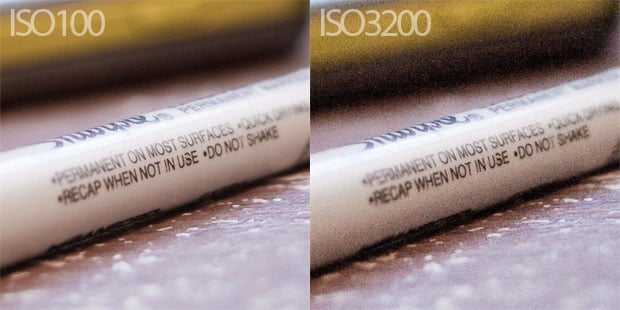
Iso is the sensitivity of the sensor to
light. Low Iso produces dark images while high Iso produces bright images. High
Iso tends to produce noise. Noise, sometimes also called static is when a photo
looks grainy, like filled with specs of dust. Some photographers seem to like
the effect that noise does to a photo and like to incorporate it into their
shots. Iso is measured using a scale that generally starts from 80 and ends
with 3200, some cameras have a wider range others don’t. An Iso of 80 will give
the darkest image while an Iso of 3200 will give you the brightest outcome.
 |
| Figure 3: ISO |
Aperture, Shutter speed and Iso are all
used in combination to make the best possible photo; they all work together to
create the perfect exposure and give you the results you want, if you’re
willing to take the leap into the world of manual photography.
References
Learn how aperture, shutter, and ISO affect exposure. 2016. Learn how aperture, shutter, and ISO affect exposure. [online] Available at: http://improvephotography.com/photography-basics/aperture-shutter-speed-and-iso/. [Accessed on: 25/10/18].
What are aperture Blades. 2016. . [online] Available at: http://www.apertureblade.com/wp-content/uploads/2012/07/featured-what-are-aperture-blades.jpg. [Accessed on: 25/10/18].
Exposure Guide. 2016. . [online] Available at: http://www.exposureguide.com/images/exposure/overexposed-and-underexposed.jpg. [Accessed on: 25/10/18].

PetaPixel. 2016. . [online] Available at: http://petapixel.com/assets/uploads/2009/12/noisecomparison.jpg. [Accessed on: 25/10/18].
Comments
Post a Comment